
Healing Hyperawareness, People Pleasing and Emotional Self Reliance
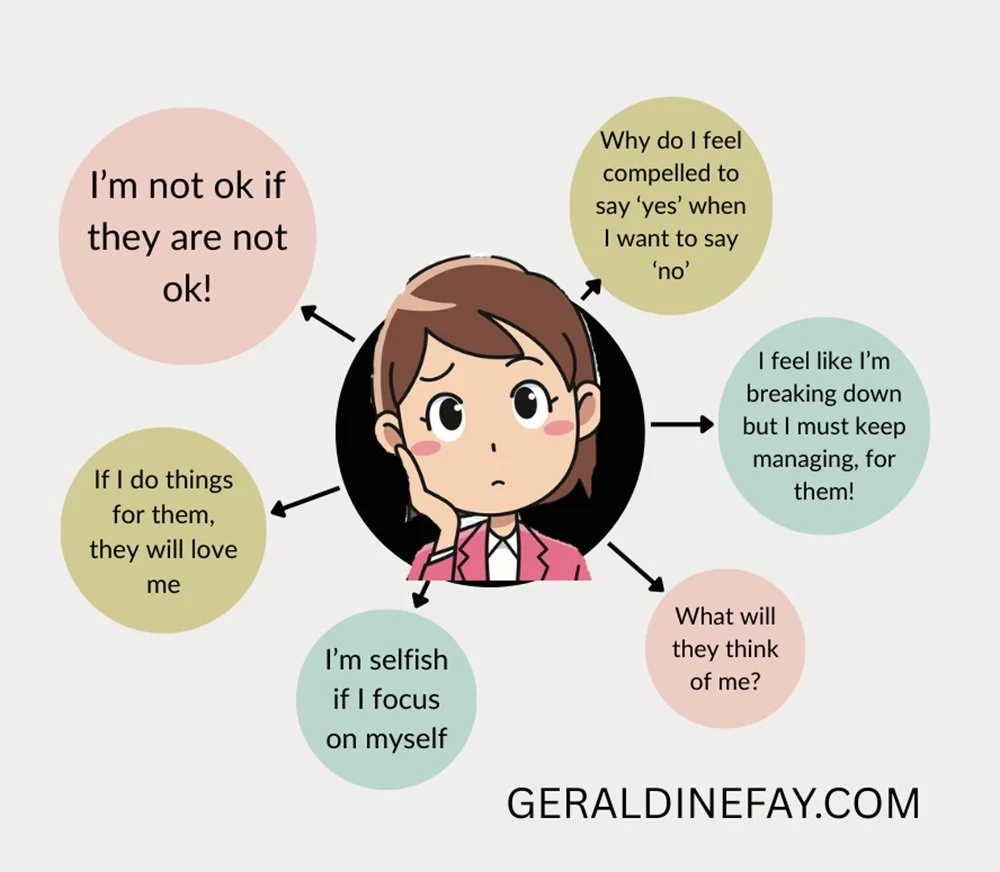
Many people who grew up in environments where emotional needs weren’t met, learned to adapt in order to survive. They became accommodating, people pleasing, emotionally self-reliant, and hyperaware of others’ feelings. While these strategies may have kept you safe in the past, they can leave you feeling exhausted, disconnected and unsure of where you end and other people begin, unsure of who You are.
If this sounds familiar, you’re not alone, and there is a way through.
Therapy can be especially helpful because it works on both the practical and the deeper emotional level. It supports you in seeing and understanding your patterns, shifting them over time and to build a stronger sense of Your self.
Why These Patterns Develop
Before we explore how therapy can help, it’s important to understand why these patterns exist in the first place. These behaviours often developed as protective strategies in response to early emotional experiences. They helped you cope, stay safe, and maintain connection when your needs felt uncertain or unsafe to express. Understanding their purpose can make it easier to gently shift them, rather than judging yourself for having them.

Accommodating & People Pleasing
Often stems from childhood and:
wanting approval to feel safe
learning that conflict is dangerous
needing to keep relationships stable to avoid rejection
learning to change yourself to keep other emotionally stable.
Emotional Self-Reliance
Often stems from:
feeling unsupported or unheard as a child (your feelings don’t matter)
learning that asking for help leads to disappointment
being made to feel that your needs or emotions are too much.
Hyperawareness
Often stems from:
living in a high stress environment
needing to anticipate danger or emotional shifts in order to keep yourself safe
developing heightened sensitivity as a survival tool
over regulating yourself so that others don’t react to you.
These strategies are not ‘bad, they are the protective adaptations of a child who knows no other way to survive. The challenge is that these adaptations become automatic and over time they can prevent you from experiencing genuine connection and inner safety as an adult.
Explore People Pleasing and Hyperawareness more deeply here.
How Integrative Therapy Can Help
As an integrative therapist, I can support you in understanding why you developed these patterns and help you gently shift them over time. Therapy offers a safe space to explore the beliefs, fears, and past experiences that shaped your coping strategies, while also providing practical tools to change how you think, feel and behave in your everyday life.
1. Recognising the Patterns
Therapy helps you identify the internal messages that drive people pleasing and emotional self reliance behaviours messages such as;
If I don’t keep everyone happy, I’ll be rejected
If there is conflict, it is my fault
I must be strong and independent
I can’t show my needs.
Once you see these patterns clearly, they lose some of their power and you can start to resolve them.
2. Calming the Nervous System
Therapy can support you in learning how to regulate your nervous system, so stress no longer triggers automatic reactions. By noticing your body’s signals, such as tension, racing thoughts, or a sense of dread, you can begin to interrupt the cycle of fight, flight, freeze, or fawn.
With guidance, you can practise grounding and calming techniques that help you return to a state of safety and balance. Over time, this reduces hyper vigilance and reactivity, making it easier to stay present in relationships, to respond instead of react, and feel more stable and centred in your day to day life.
3. Building Healthy Boundaries
People pleasers often struggle to say ‘no’ or express their needs. Therapy supports you in:
communicating assertively without aggression
setting healthy boundaries
expressing your needs without guilt.
4. Reconnecting With Your True Self
When you are always adapting to others, it can become easy to lose touch with your own wants, values, and identity. Over time, you may start to define yourself by other people’s needs or expectations, rather than by what feels true to you. Therapy can help you gently rediscover who you are beneath the coping strategies, reconnect with your own desires and boundaries, and begin living in a way that feels more authentic and aligned with your inner self.
5. Healing Emotional Wounds
Therapy also creates a safe and supportive space for deeper healing. It can help you gently explore and process old pain that may have been stored in your body and nervous system, even if you’ve learned to “manage” it on the surface. Through this process, you can begin to release emotional tension, soften the grip of shame, and make sense of what you experienced. Over time, this can lead to a stronger sense of self compassion, a calmer nervous system, and a growing feeling of safety inside your own body. As you heal, you may also notice greater confidence in relationships, clearer boundaries, and more trust in your ability to be seen and supported.
If This Resonates With You
If you recognise these patterns in yourself, accommodating, people pleasing, emotionally self-reliant, hyperaware, it may be time to explore a gentler way of living. These coping strategies may have helped you stay safe, but they can also leave you feeling exhausted, disconnected, and unsure of what you truly need.
Healing is not about becoming someone else or erasing the parts of you that kept you safe. It’s about slowly reclaiming the parts of yourself that were put aside while you were surviving. It’s about learning to live with more ease, more presence, and more emotional safety, so you can show up in relationships without constantly monitoring, adapting, or protecting yourself.
Start With a Conversation
If this feels familiar, you’re welcome to begin with a free, no-obligation consultation, a gentle conversation to explore what you’re experiencing in your life right now and to ask the question you need to see if my way of working is right for you.
