
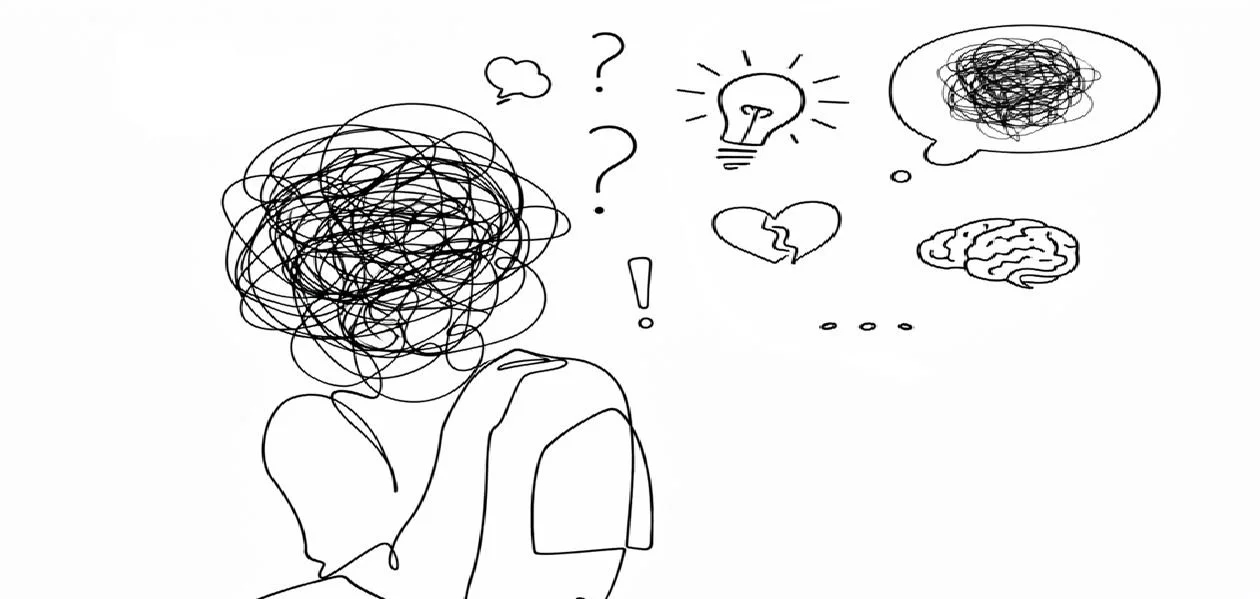
Why Can’t I Stop Overthinking?
Understand why your mind won’t switch off and how to change this behaviour.
You may recognise yourself in this the following;
Your mind keeps going, even when you want it to stop
You replay conversations in a constant loop
You think through every possible outcome, even the ones that you know will never happen
You try to find the “right” answer, make the “right” decision, even when you are exhausted.
And yet, the more you think, the harder it becomes to feel clear in your thoughts. It can feel like your mind won’t switch off, even when you’re tired, even when you just want some space, even when you want it to stop.
And you find yourself asking, “Why can’t I just stop thinking?”
If you recognise yourself here, then this article is for you.
What Is Overthinking
Overthinking isn’t just thinking more, it’s a pattern where your mind becomes busy, repetitive and very difficult to settle or relax.
Overthinking can include all or any of the following;
replaying situations over and over, again and again
analysing conversations or decisions to the Nth degree
imagining all the things that could go wrong
trying to work out every single detail before you make a move
finding it hard to switch off, especially at night.
Sometimes overthinking can feel like you need to solve something important but instead of clarity, you end up feeling more overwhelmed and further from a solution.
Overthinking can look different for everyone, but often includes:
difficulty making decisions
feeling mentally exhausted
second guessing yourself
getting stuck in loops of thought
struggling to relax or be present.
From the outside, it can seem like you’re just “thinking things through”. Everything can look fine to other people but inside, it can feel relentless.
The Patterns Underlying Overthinking
Overthinking is rarely just about the situation in front of you. More often, it’s connected to deeper patterns in how your mind has learned to respond and often stems from childhood experiences.
At some level, your mind may be trying to:
avoid getting things wrong
prevent something from negatively affecting you
protect you, keep you safe or in control of things
find certainty in uncertain situations.
This isn’t a random act, it’s your mind actively trying to protect you. Often these patterns develop in childhood and, at that time, they were necessary for your emotional and psychological survival. But now, as an adult, they are actively causing you distress or harm and are often referred to as ‘behaviours that no longer serve you’.
This pattern can often be very difficult to stop because overthinking isn’t something you consciously choose, tt’s a pattern that has become automatic.
When overthinking is out of your active control, you may notice that;
your mind starts racing without you intending or wanting it to
you get pulled into thoughts before you realise
you struggle to “switch it off”, even when you try really hard
the same types of thoughts keep returning, even when you don’t want them to.
If this feels familiar, you may also be aware of how this connects to anxiety, self doubt, feeling stuck in life, being emotionally activated by situations or people. These experiences very commonly occur together and reinforce each other.
Why Your Mind Won’t Switch Off
It’s common to try to stop overthinking by telling yourself to think less., to distract yourself, to ‘just relax’ or try to push the thoughts away.
But these solutions rarely work because the thinking itself isn’t the problem. It’s what’s driving the thinking underneath that’s the real issue.
When your nervous system feels uncertain, unsafe, or under pressure, then the mind stays active. It’s a biological brain thing. Every second of your existence, your brain is actively;
Trying to anticipate
trying to solve
trying to stay in control
trying to keep you safe, even at your own expense.
That’s why it doesn’t easily switch off, it is wired to believe that your very life is dependent on it staying alert. That may have been true tens of thousands of years ago, when your brain had to keep you alert to the tiger jumping out from behind every tree or from the dangerous pit that potentially lurked beneath the ground you were walking on. But that isn’t true nowadays, but changing times didn’t rewire your brain, so it still stays in constant ‘scan for danger’ mode.
How Change Begins
Rather than trying to stop your thoughts, my work begins by helping you understand them. When you begin to explore the deeper layer of why and how, you start to discover;
what your thinking is trying to do
what it is trying to protect you from
and how it connects to your emotions and nervous system.
And that’s when you will notice something starting to shift. You will notice your thoughts becoming less intense, less urgent and less constant.
As these patterns begin to soften, you may notice:
more space between your thoughts
less need to analyse everything
greater clarity in your decisions
a calmer, quieter mind
an increased ability to be present.
Over time, your mind begins to settle naturally, not because you’ve forced it to stop, but because it no longer needs to keep going in the same way. The slower pace becomes natural and lasting.
How I Work
In my therapy work, I help you explore what’s beneath your overthinking and together, we;
understand what is driving your pattern of overthinking
explore how it has been shaped over time
work with both your mind and body
and support new ways of responding to emerge.
This way of working allows change to happen in a way that feels natural and sustainable and creates lasting transformation.
Start with a conversation
If you recognise yourself in this and feel ready to begin working through it in therapy, you don’t have to keep navigating it on your own.
You can learn more about how I work on my Therapy and Counselling page.
Or, if you feel ready, you’re welcome to book a no obligation conversation call where we can talk about what’s been happening for you and whether this feels like the right next step. Often, once you begin, change can start to happen much sooner than you might expect.
There’s no pressure or obligation, the initial conversation is just a space to talk and ask any questions you may have.
I work with clients online and in person in Crossmaglen, Armagh, creating a safe, supportive space wherever you are.